BridgeOTW
Lead Engineer, Hack4Impact BU
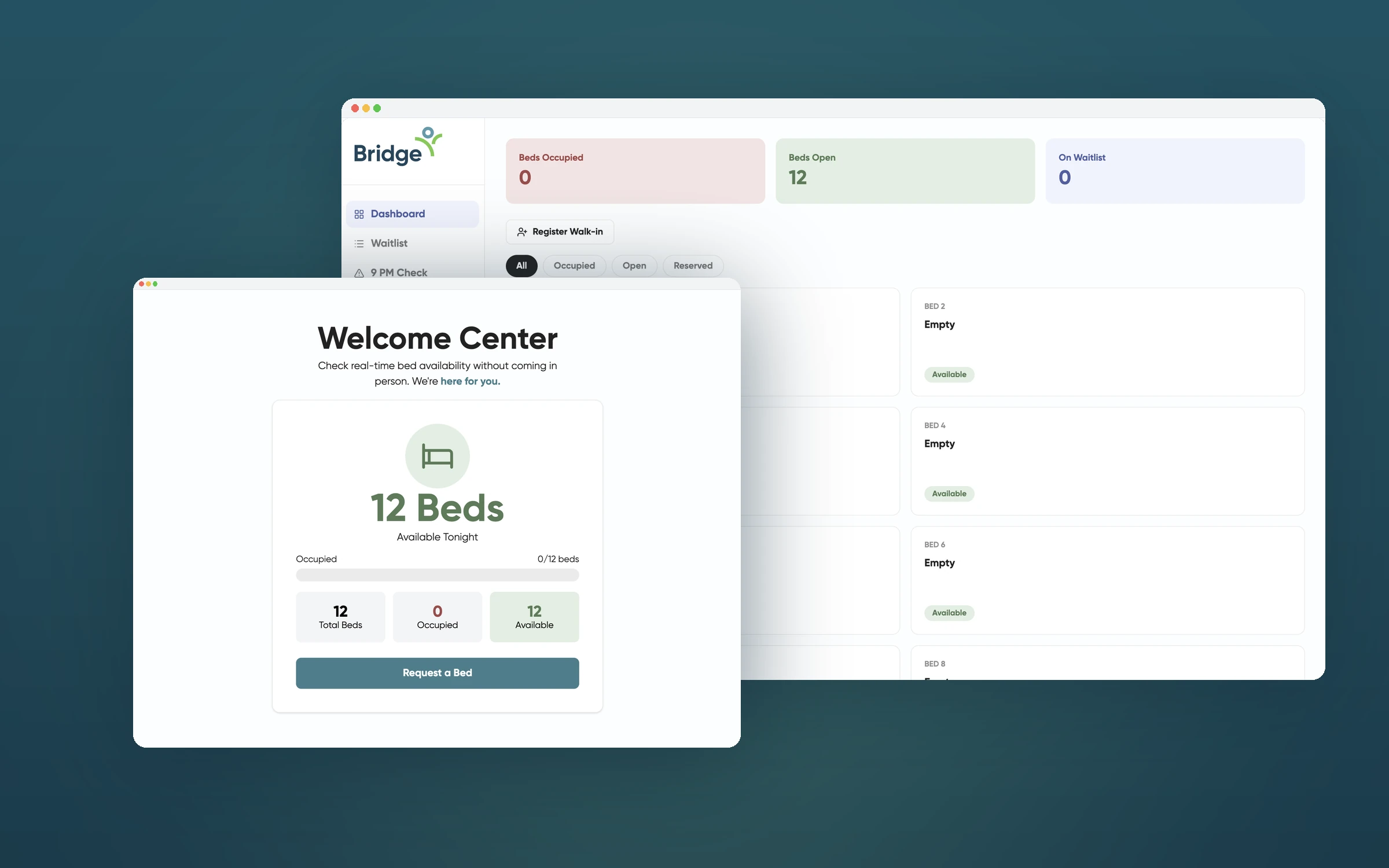
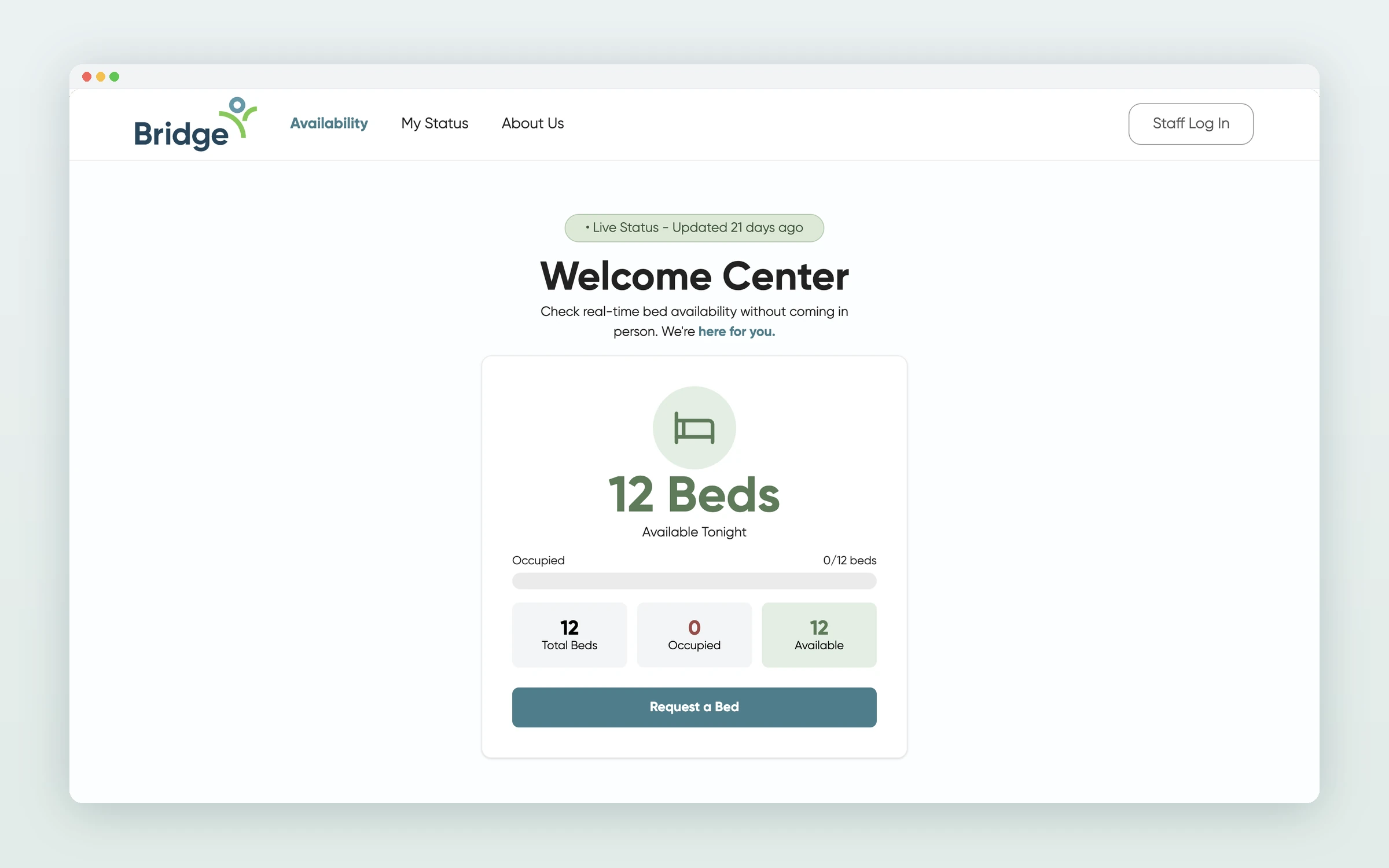
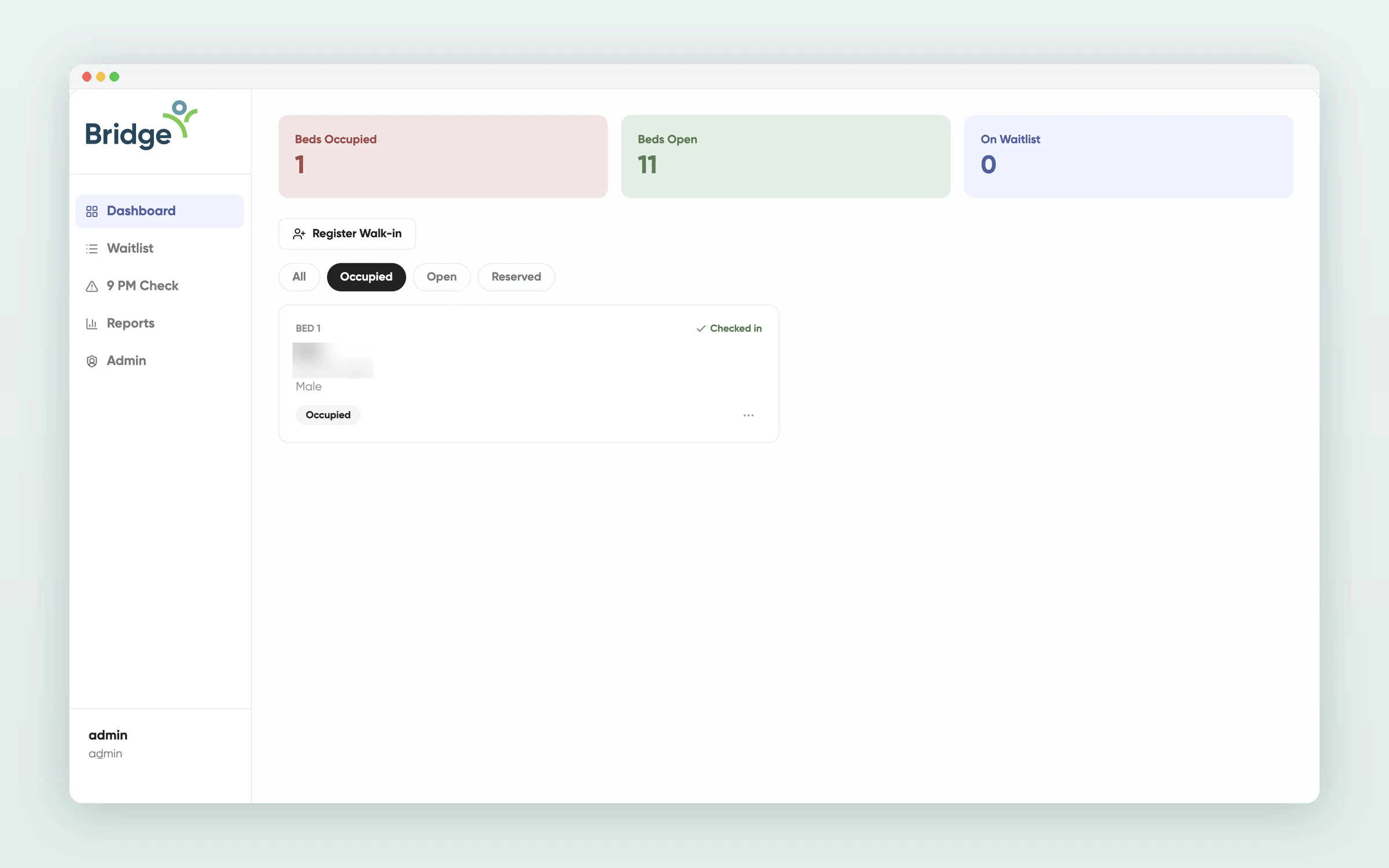
Young adults experiencing homelessness had to travel to a Boston shelter in person just to learn whether a bed was free. This puts all 12 beds live on a phone.
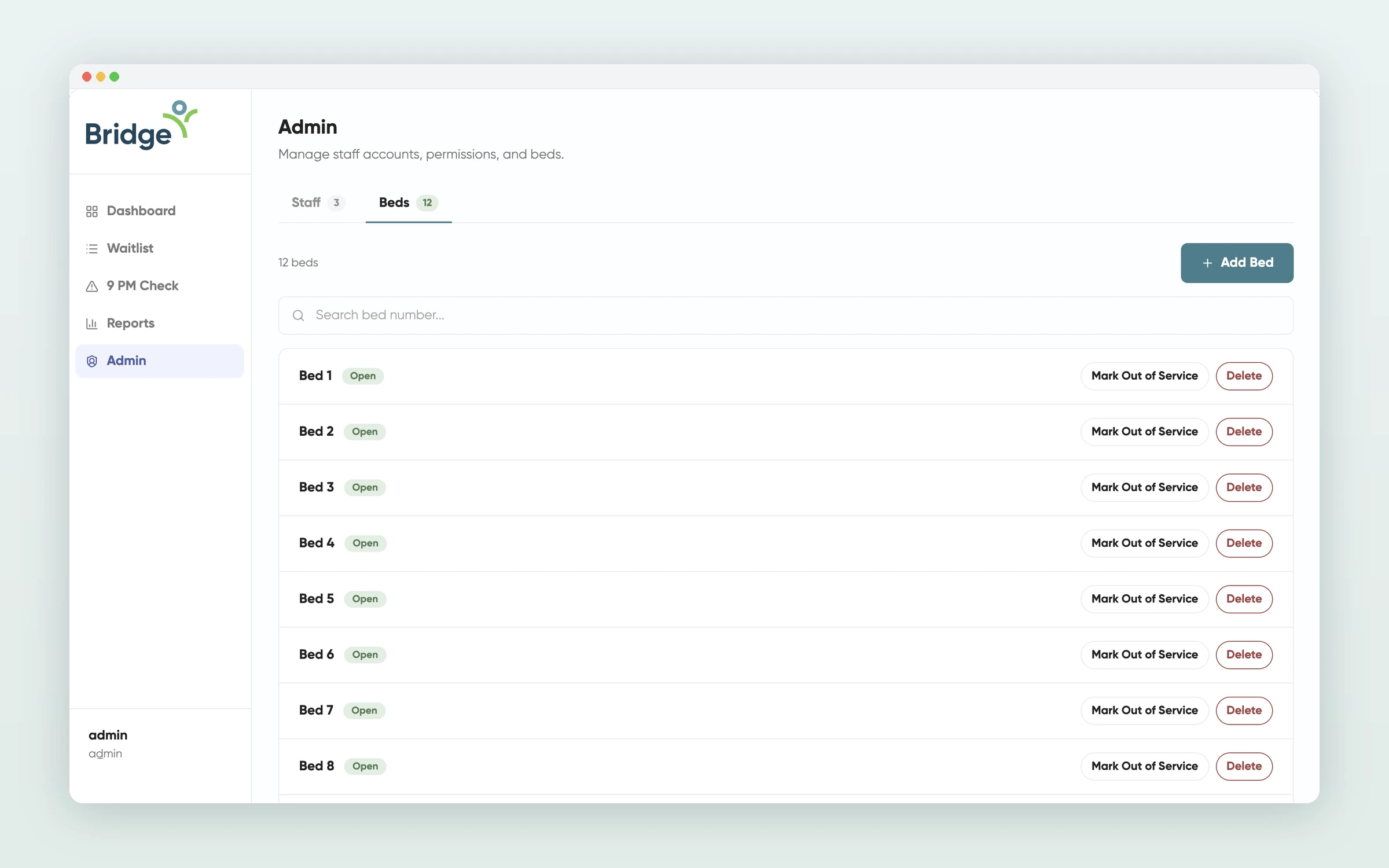

1 / 13
- Status
- In development
- Role
- Lead Engineer
- Client
- Bridge Over Troubled Waters
- Team
- 3 engineers, 1 PM, 1 designer
Problem
Bridge Over Troubled Waters serves young adults experiencing homelessness in Boston. Checking whether a shelter bed was available meant physically travelling to the shelter and asking: a wasted trip across the city if the answer was no, and no way to plan an evening around it.
Staff, meanwhile, were tracking capacity manually with no shared source of truth.
Approach
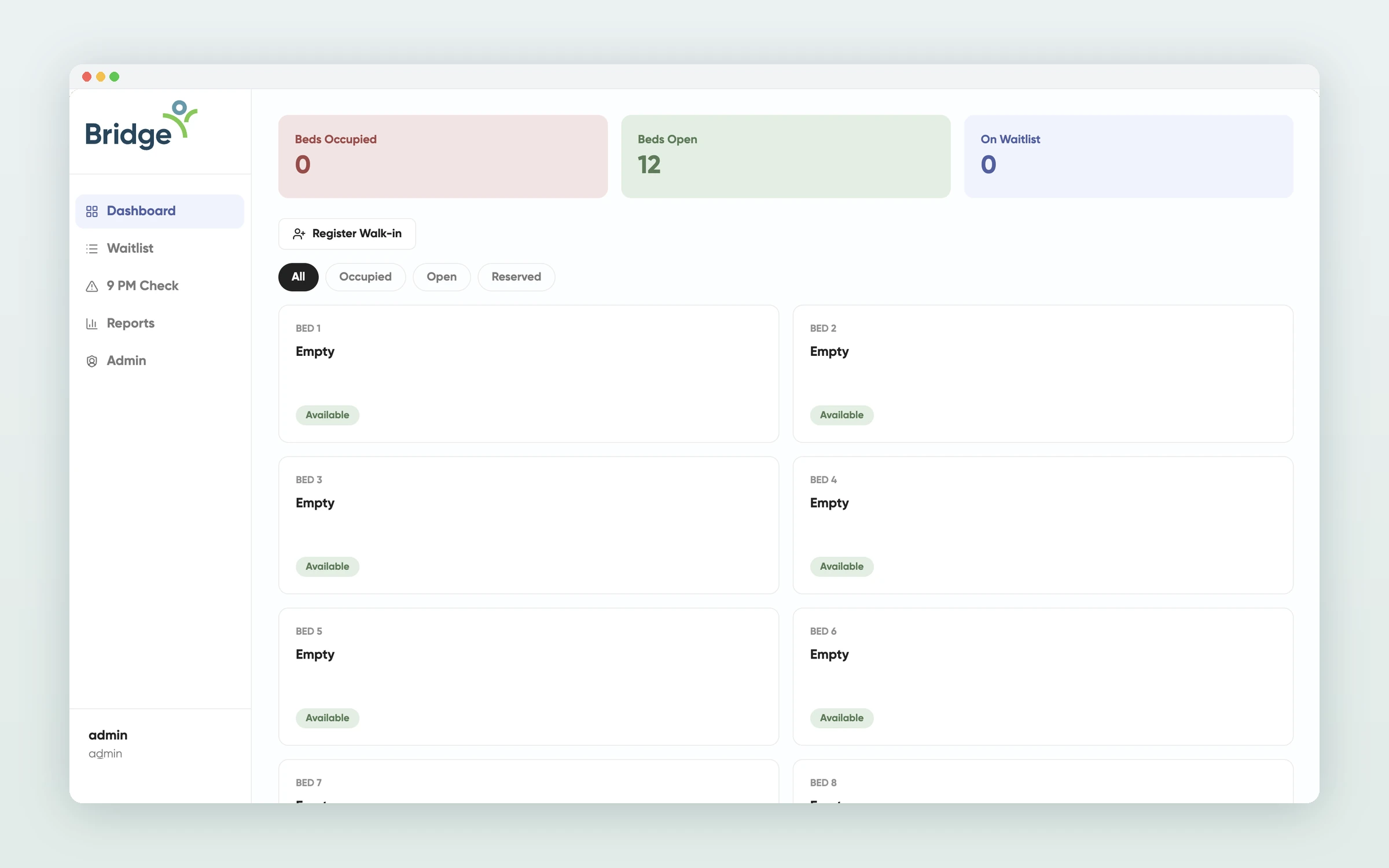
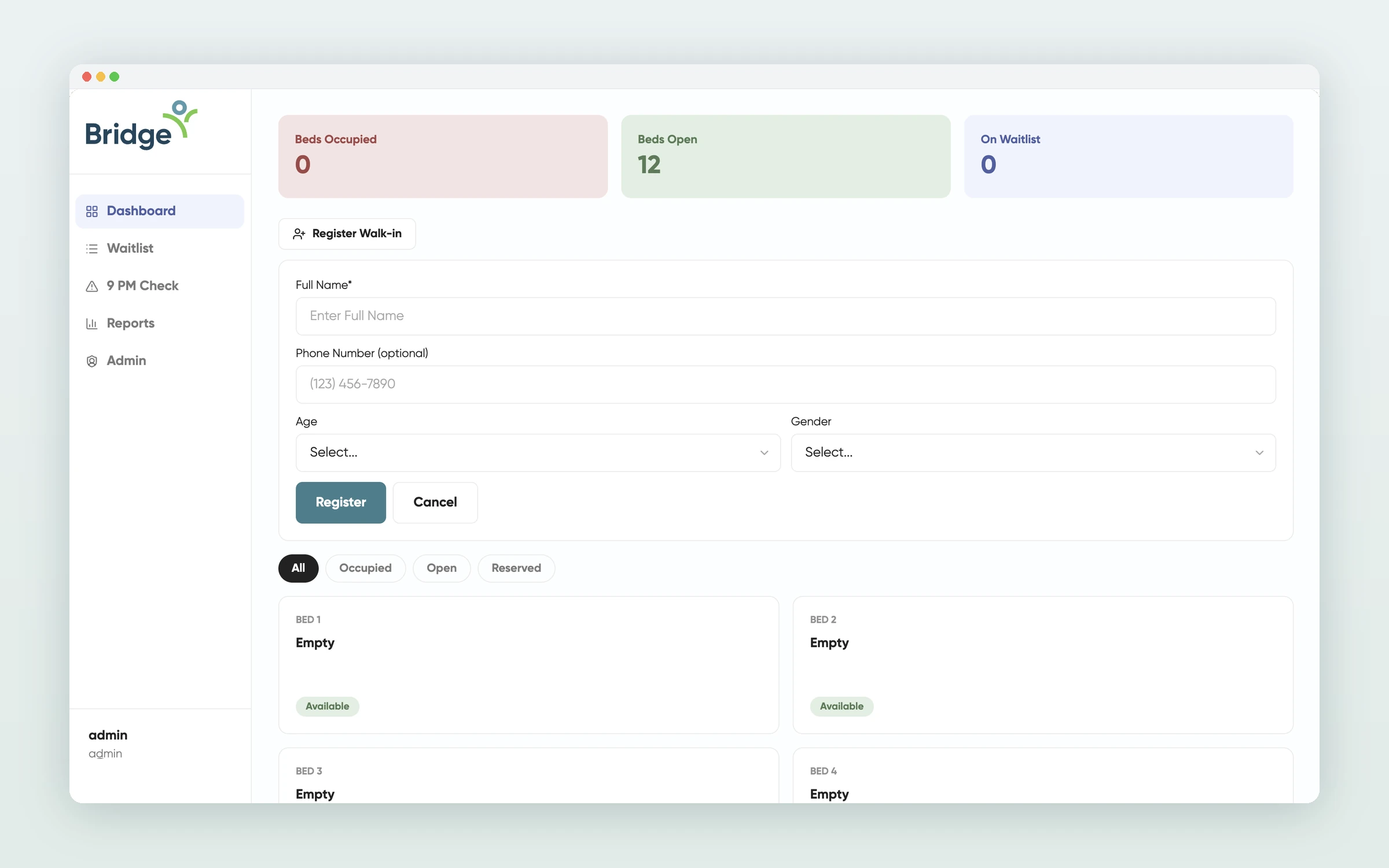
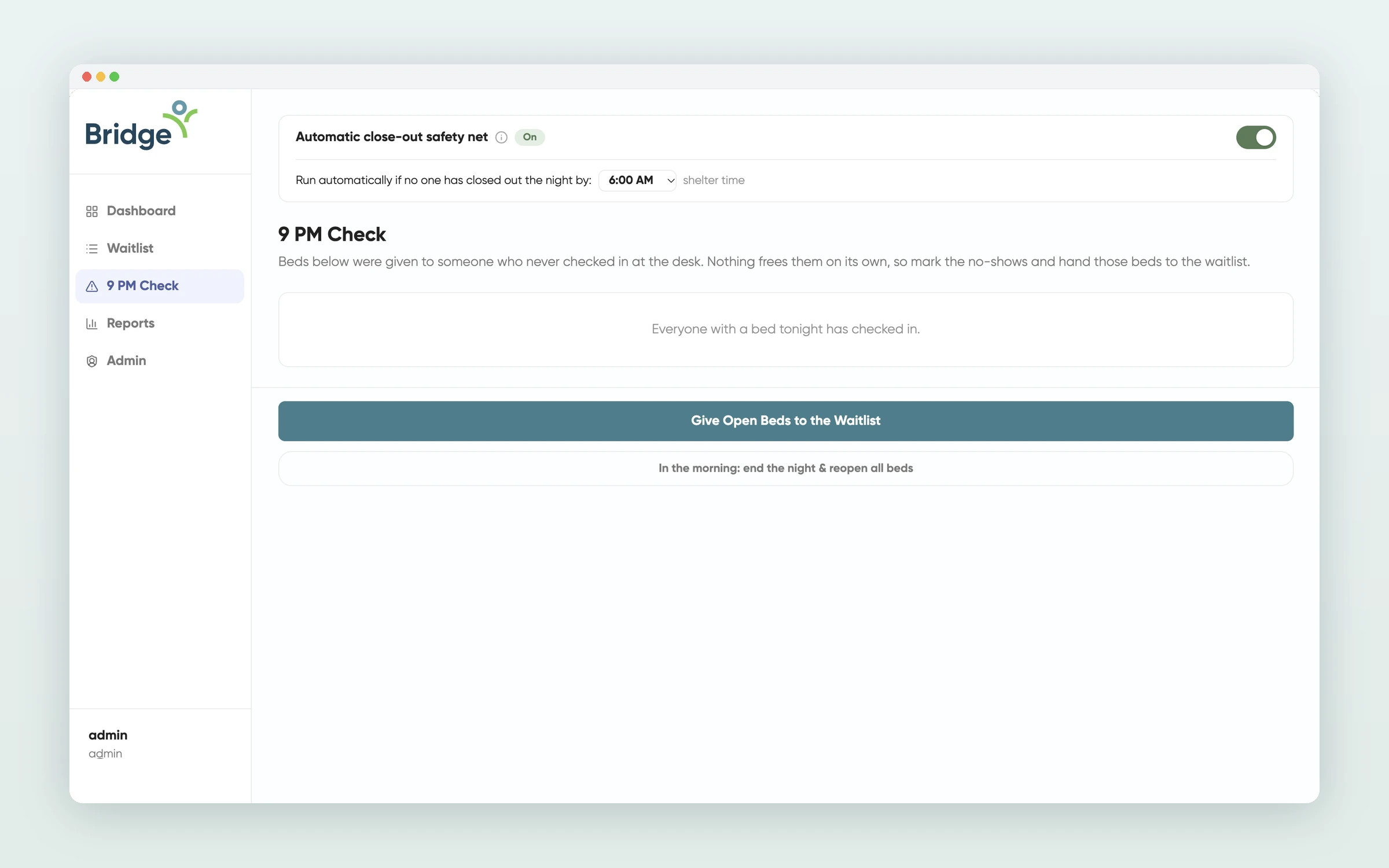
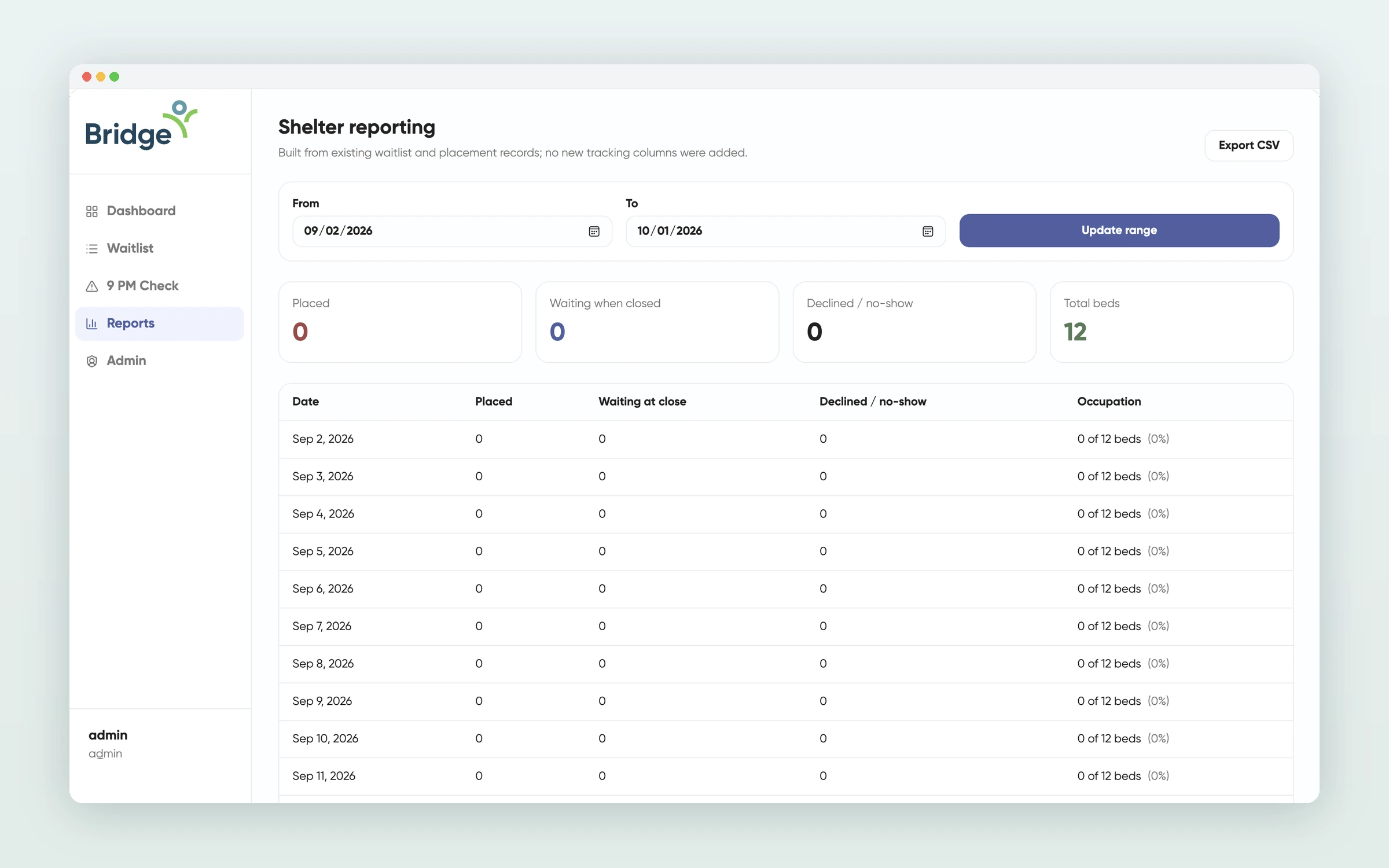
A realtime availability platform that replaces the in-person capacity check. All 12 beds are tracked live, with claim and interest indicators, so a user can see status from their phone before deciding to travel.
An auto-lock mechanism marks unclaimed beds as taken after 6pm, matching how intake actually runs at the shelter rather than forcing staff to keep a dashboard honest by hand.
Architecture decisions
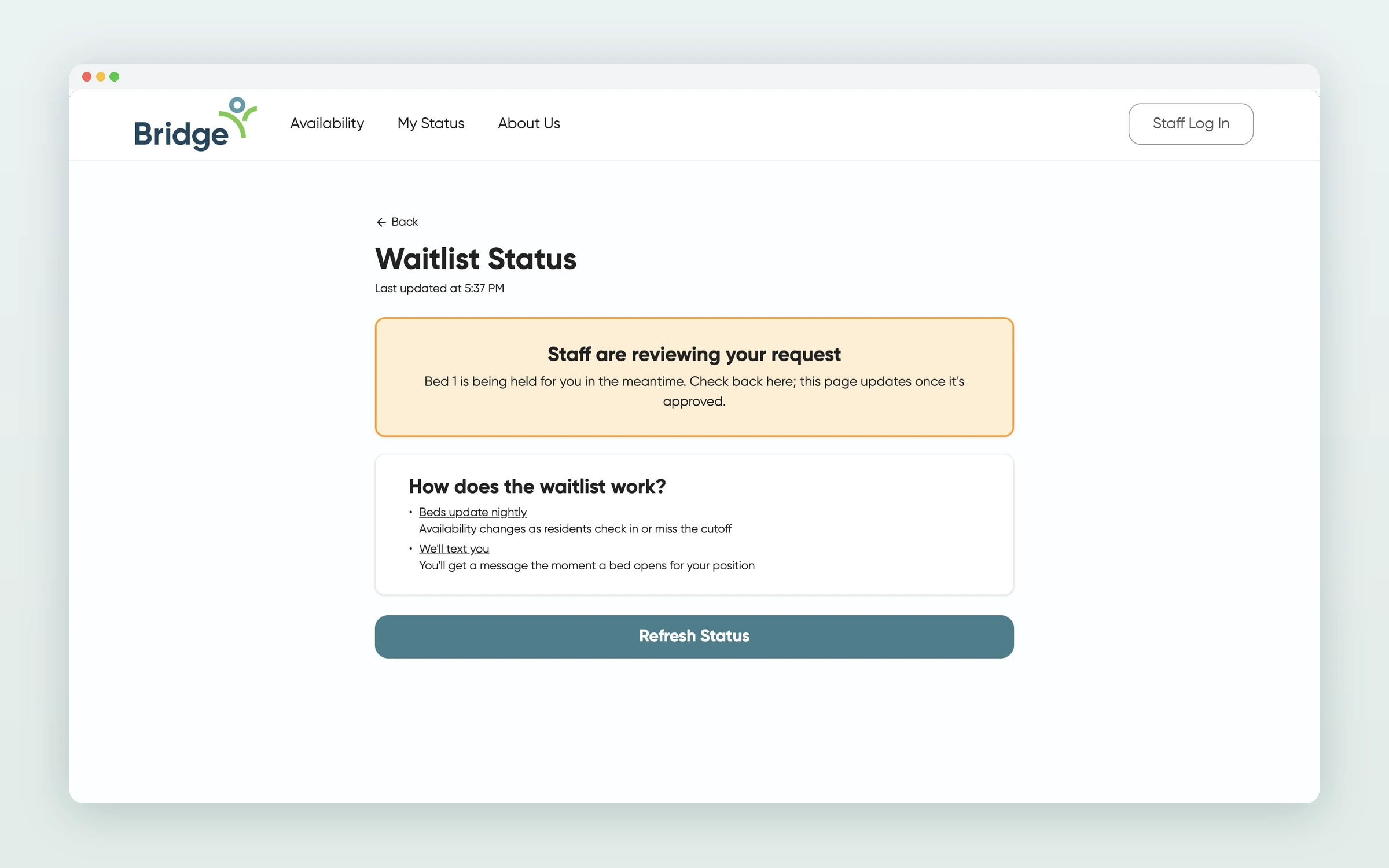
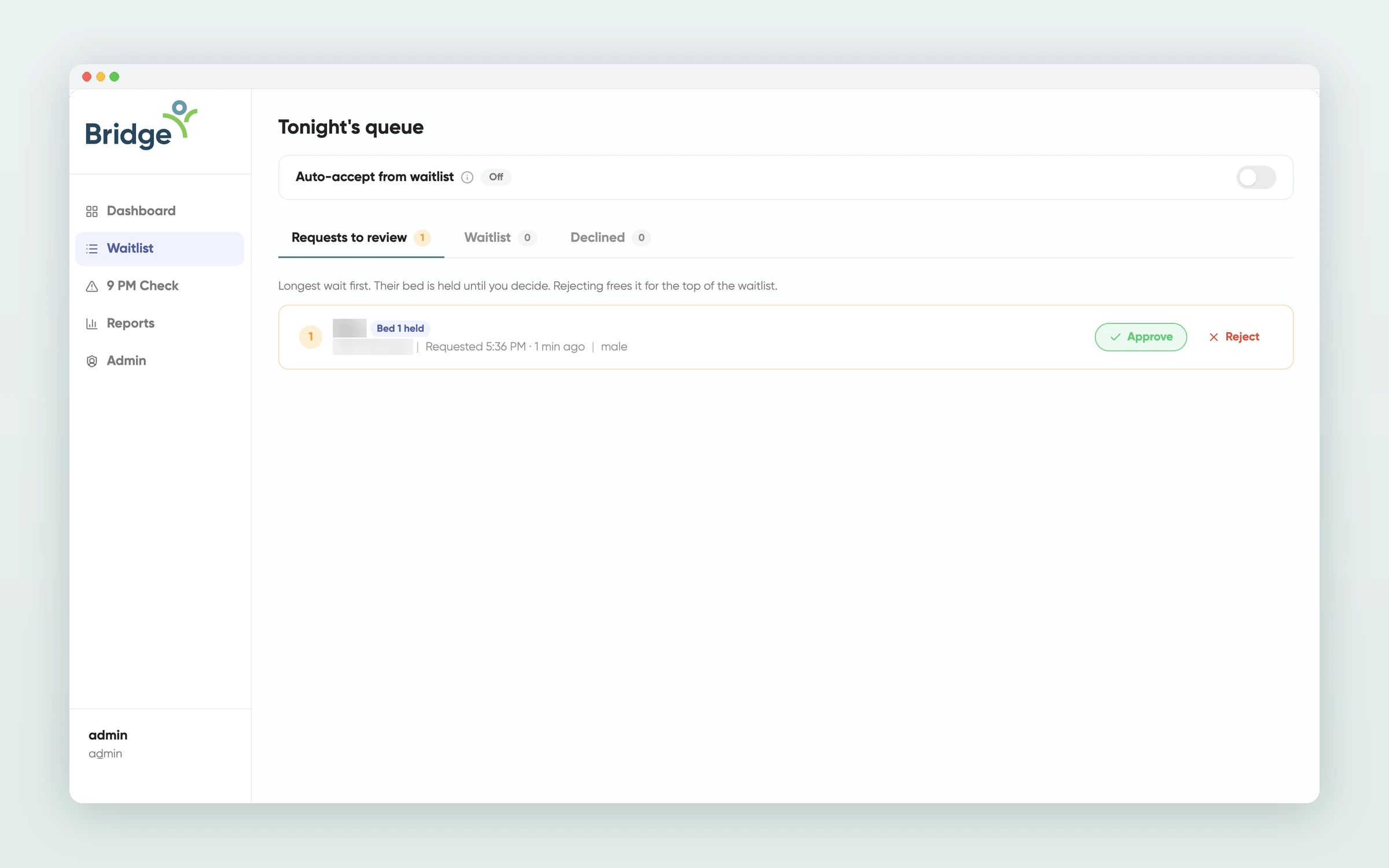
The waitlist assumes the network will fail. Position tracking tells a user exactly where they stand ("you're #7"), but the population being served does not reliably have working cell data. So the waitlist ships with a low-connectivity lookup path that still answers the only question that matters when the full app cannot load.
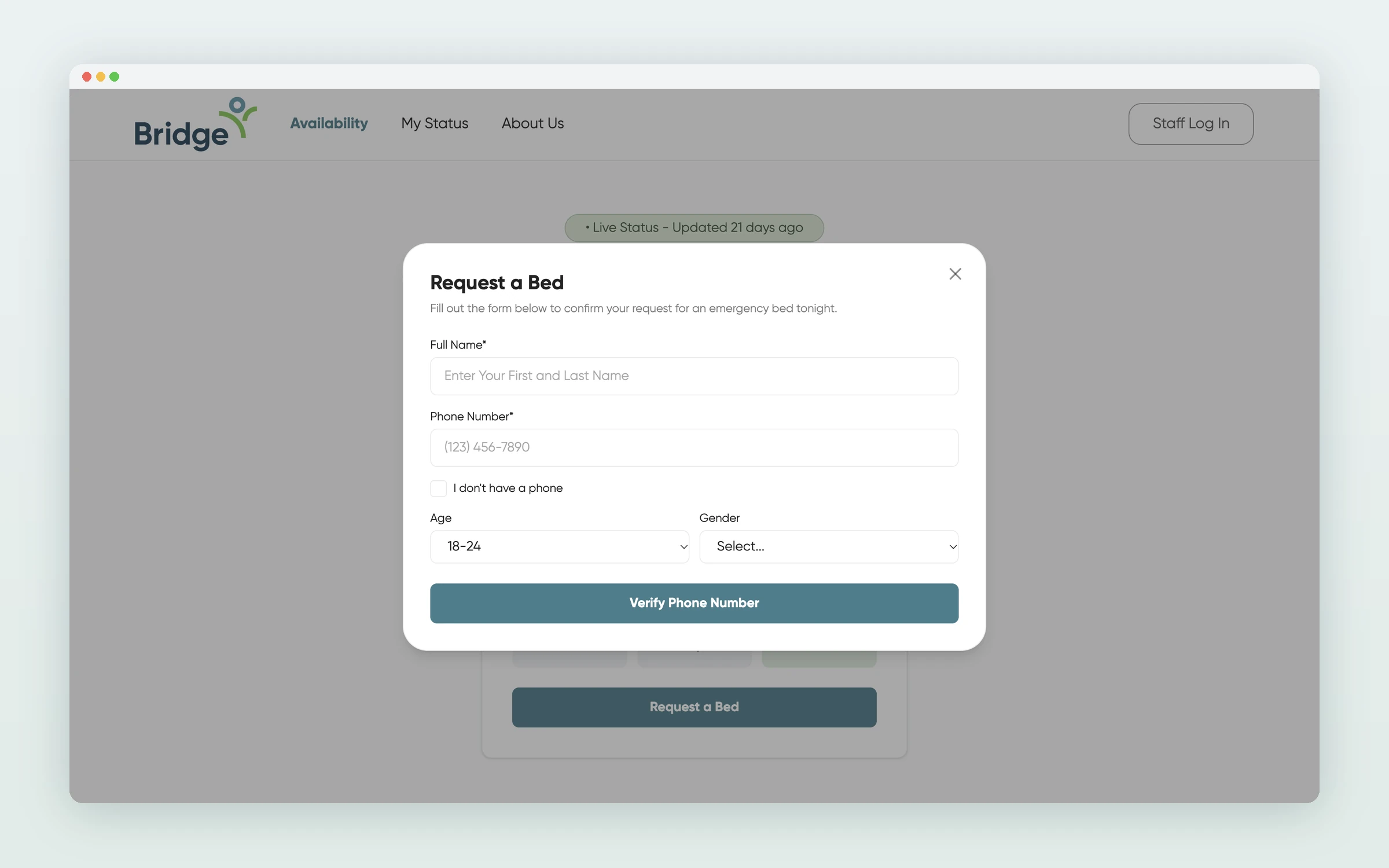
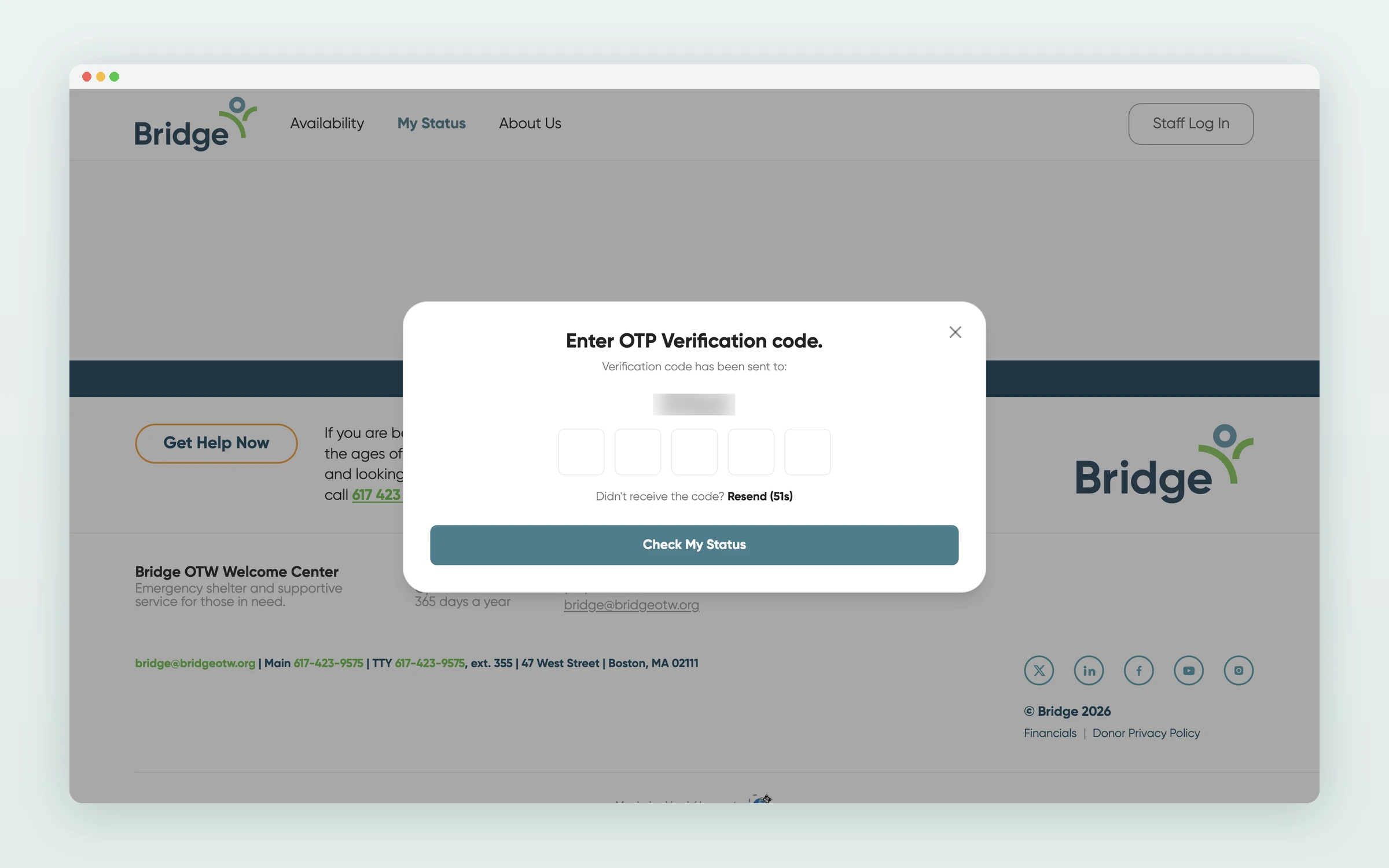
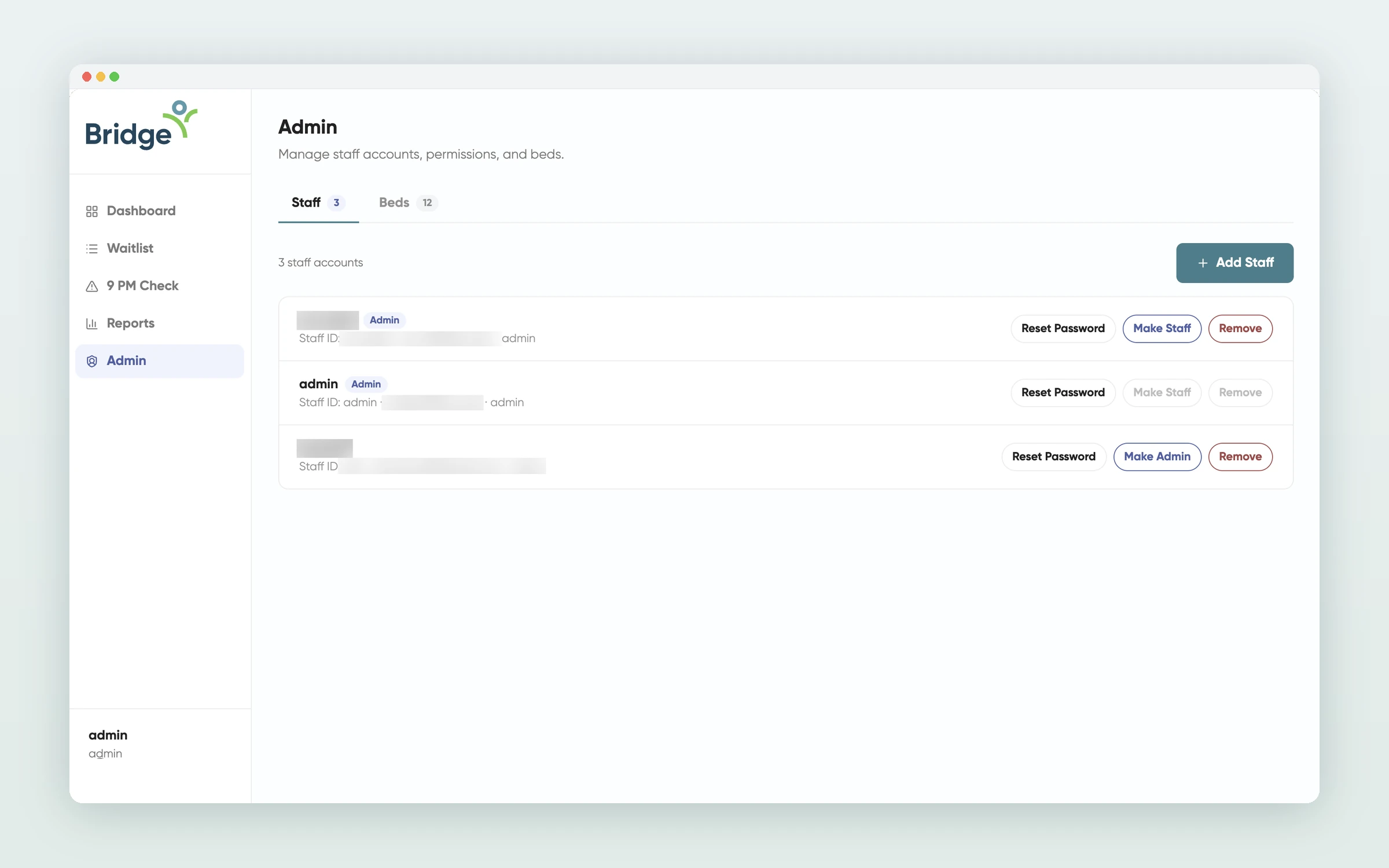
Authentication is deliberately flexible. Requiring an email address or government ID would exclude exactly the people the platform exists for. Users authenticate with either a username and password or phone verification, so account access does not depend on owning a particular device or holding particular documentation.
Live dashboard over camera feed. Working with the PM, a camera-based occupancy feed was scoped out on privacy grounds, because surveilling a shelter to count beds is the wrong trade for the residents. Status is reported through the app instead.
The UI is designed for two very different readers on the same data: staff scanning a desktop dashboard, and a user checking a phone outdoors. Both get at-a-glance status; neither gets a layout tuned for the other.
Leading the team
Leading 3 engineers alongside a PM and a UI/UX designer: breaking features into tasks, delegating, reviewing PRs, and keeping technical decisions aligned with the client and the Director of PM through an end-of-semester launch.
Built with
- Next.js
- · TypeScript
- · Supabase
- · Twilio
- · Tailwind